.png)
BangladeshNationalist Party-BNP

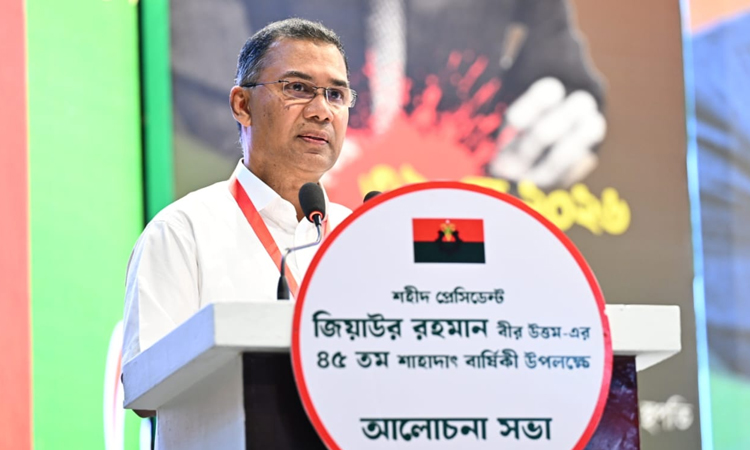
BNP’s acting chairman Tarique Rahman has said that it is possible to build the Bangladesh people aspire to through collective efforts. He made the remarks as the chief guest at the National Conference 2025 of the Doctors’ Association of Bangladesh (DAB), held at the Wills Little Flower School auditorium in Kakrail on Saturday afternoon.
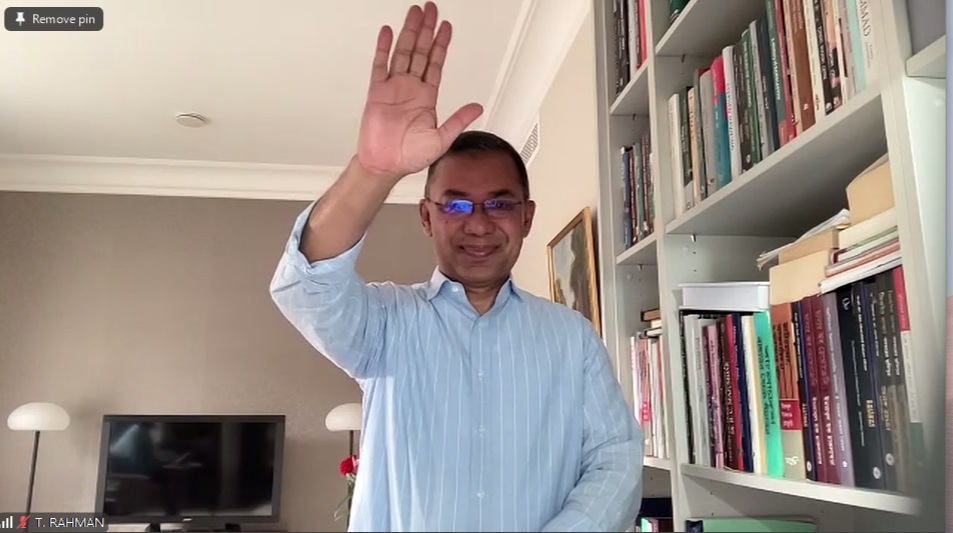
Tarique Rahman said that after the long path of struggle and movement, the people breathed freely on August 5 following the fall of the autocracy through a mass uprising of students and citizens. With the end of autocracy, the people began to hope for a new reconstruction of Bangladesh. “We believe that if we all work together, we can build the Bangladesh of the people’s dreams,” he added. Speaking virtually from London at the DAB council session yesterday afternoon, he made these statements.
The National Council 2025 of the BNP’s physicians’ organization, Doctors’ Association of Bangladesh (DAB), was held in the premises of Wills Little Flower School & College in Kakrail. After the council session, voting began at 1 PM and ended at 5 PM. There were 3,117 registered voters in the DAB election, of which 2,606 cast their votes — an 83.6% turnout. Two panels contested the election: the “Aziz-Shakur” panel led by Professor AKM Azizul Haque and the “Harun-Shakil” panel led by Professor Harun Al Rashid.
Tarique Rahman emphasized that to ensure accountability, a democratic system must be established everywhere. He said, “The people of Bangladesh have many expectations from the BNP. One of the smallest parts of those expectations is to create a system — a framework for accountability. If we can gradually build a proper and transparent system, we can establish accountability everywhere. If we can start here (at DAB), gradually we can begin in different levels of our party. If we start at various levels within the party, I firmly believe that, Insha’Allah, we will be able to introduce accountability gradually at all levels — from local to national.”
Referring to the UK, where he lives in exile, Tarique said that accountability there ensures citizens receive services. “Dr. Suman has highlighted various issues in the digital magazine. Such problems exist in Bangladesh’s education, justice, transport, and agriculture systems — in almost every sector. Over 50 years have passed in Bangladesh, yet our democratic process has been repeatedly hindered. Unfortunately, I have had to spend many years abroad. My experience here (in the UK) is that because there is accountability in society and the state, when a patient goes to a hospital, they get at least the minimum service they are entitled to. This applies not just to patients, but to everyone in all walks of life. Why? Because this society and state have built an accountability system over many years. In Bangladesh, such a system has not yet been established.”
Seeking cooperation to implement BNP’s 31-point reform plan, Tarique said, “There are ongoing discussions about reforms. You all remember that the Bangladesh Nationalist Party (BNP) presented these reforms to the nation about two and a half years ago. Along with like-minded political parties with whom we were on the streets fighting to oust autocracy and create an environment where people could breathe freely, we presented the 31 points — or reforms — to the nation. My request today is this: if we want to implement the 31 points, including those related to the health sector, then Insha’Allah, if we can form a government with the people’s support, we will need your cooperation in implementing them. Because it is not possible for only the government, only our party MPs, or only our leaders to implement the 31 points. To implement them, we need the cooperation of every citizen.”
He said, “The country belongs to all of us. Therefore, if we want to build the nation, we all have to work together. If everyone contributes just a little, we can go a long way. Right now, there is a desire for change across Bangladesh. Every person in society wants a change — a positive change. Just one year ago, on August 5, a much-anticipated change occurred in Bangladesh. After that day, when the entire nation could finally breathe, people wanted the coming days to be better. They have expectations from the BNP and believe that at least the BNP will take the initiative. We must begin the process of bringing about that change.”
BNP Secretary General Mirza Fakhrul Islam Alamgir said, “Dr. Farid is a very close physician to me — my wife’s doctor — and I am deeply indebted to him. Dr. Suman also treats my wife with great sincerity, and of course, I often go to them myself. Dr. Farid told me that, despite being an expert in his field, he cannot carry out cancer-related work here after returning from the UK. Those of you who have come from abroad and want to establish a ‘Center of Excellence’ here are unable to do so. Today, our acting chairman — not just our acting chairman, but our future leader, future helmsman, and future prime minister — is here. I want to draw his attention to this matter. His wife, Zubaida Rahman, is also a renowned doctor and graduated from here. I believe he will give great importance to this issue, because ensuring healthcare for 180 million people is a huge responsibility.” At this point, the entire auditorium burst into loud applause in honor of Tarique Rahman.
Speaking on drug policy, Mirza Fakhrul said, “Two days ago, pharmaceutical manufacturers came to me with serious concerns. The current government’s assistant adviser to the Ministry of Health and Family Welfare is introducing measures or laws that could shut down the industry. This industry, which used to compete with the world and export products, is now saying they may have to close factories. This means the government’s policies have reached such a state. Our acting chairman’s 31 points — which we call a Magna Carta of essential reforms — also significantly emphasize the health sector.”
Calling for a prosperous Bangladesh, Mirza Fakhrul said, “I am getting old. I want to see not just a democratic system or the right to vote in Bangladesh, but the people’s right to health, the right to live, and the right to food ensured.” He added, “During the anti-fascist movement, many of our doctors were obstructed from treating the injured, and actions were taken against them. I sincerely thank and express my gratitude to you — the nation will always honor the doctors who risked their safety to treat the injured during that time. I also want to request the current government to take full responsibility for treating those who were injured — this is one of our biggest demands.”
The council was presided over by BNP chairperson’s advisory council member and DAB council preparation committee convener Ismail Zabihullah, and conducted by Professor Lutfur Rahman. Other speakers included BNP chairperson’s advisory council members Bijon Kanti Sarkar and Syed Moazzem Hossain Alal, DAB presidential candidates Professor AKM Azizul Haque and Professor Harun Al Rashid, Dr. Mostafa Aziz Suman, BNP standing committee member Professor Dr. AZM Zahid Hossain, advisory council member Professor Dr. Farhad Halim Donar, BNP health affairs secretary Dr. Rafiqul Islam, joint secretary Dr. SM Rafiqul Islam Bachchu, Dr. Parvez Reza Kakon, BNP chairperson’s private secretary ABM Abdus Sattar, and preparation committee members Professor Dr. ABM Obaidul Islam, Professor Mamun Ahmad, and Dr. Shah Muhammad Aman Ullah.