.png)
BangladeshNationalist Party-BNP

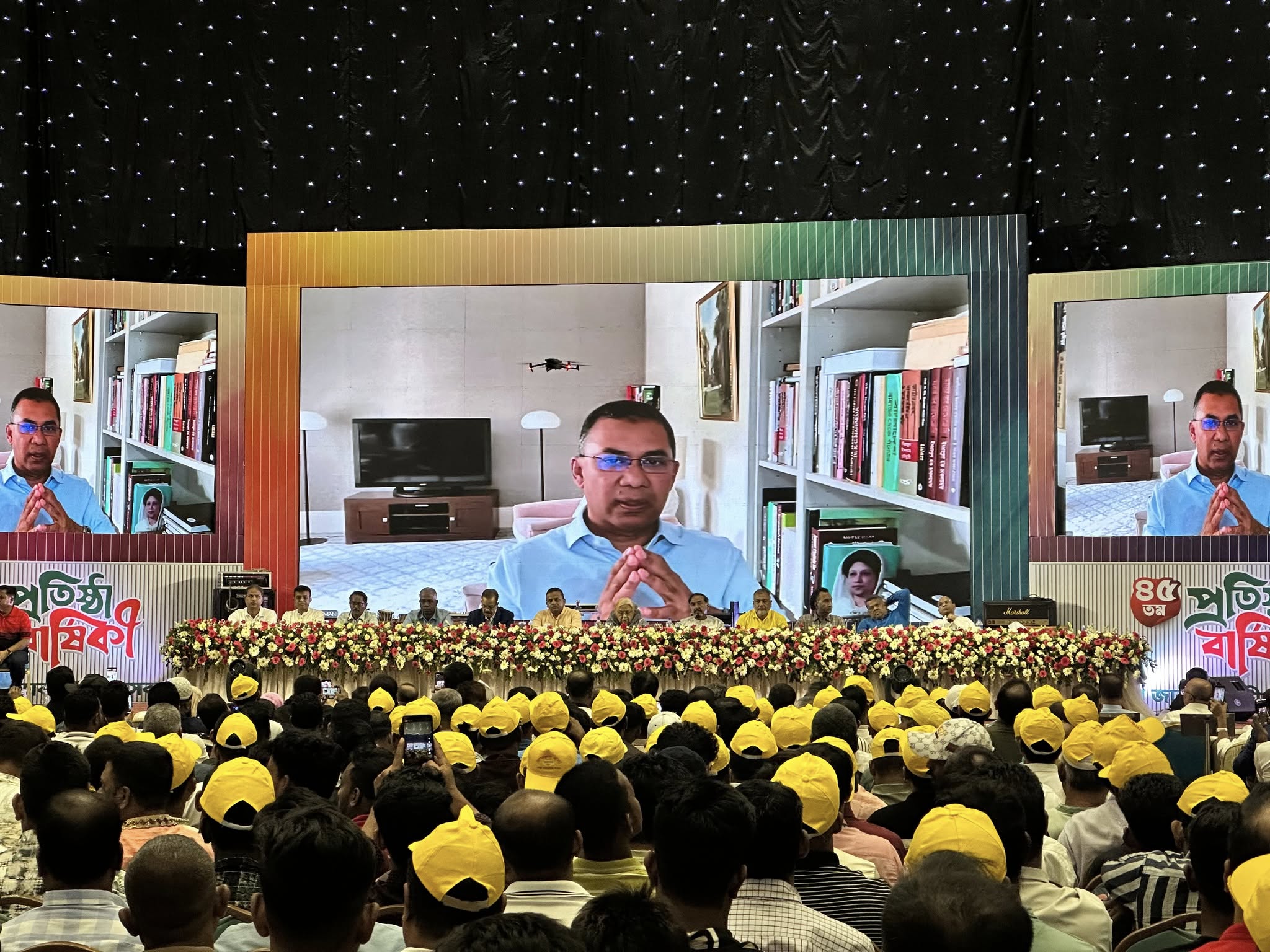
BNP’s Acting Chairman Tarique Rahman has remarked that if pro-democracy parties create distance among themselves, fascism will seize the opportunity. He said the interim government in a fascism-free Bangladesh has indicated that the possible time for the next election is February of next year. Through this election, after more than a decade and a half, the people will finally be able to cast their votes freely and elect their representatives without fear. However, different statements from leaders of fellow parties and comrades-in-struggle in the anti-fascist movement have raised questions among the public about whether the election will indeed be held on time.
Addressing the leaders of all pro-democracy parties, he said: “If distance grows among the democratic forces opposed to fascism, it will create opportunities for defeated fascism to rise again. That’s why we all must remain vigilant. Fascism cannot be stopped merely by writing constitutions.”
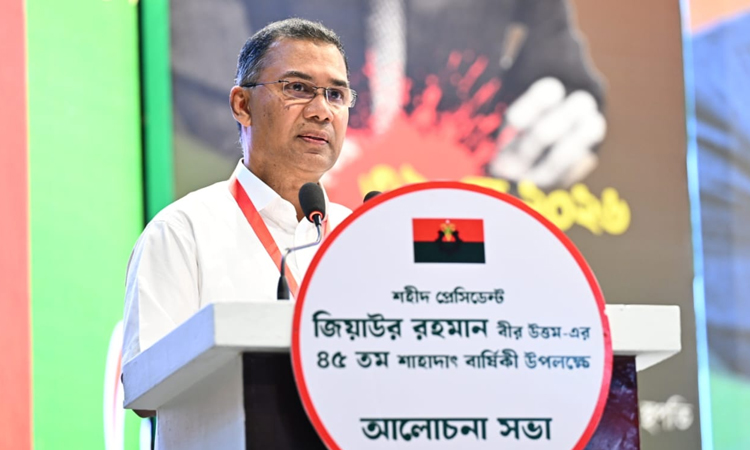
Tarique Rahman made these remarks Tuesday night while addressing, virtually as chief guest, a program marking the 45th founding anniversary of Jatiyatabadi Swecchasebak Dal at the Bangladesh-China Friendship Conference Center. After the discussion session, a cultural program was held. He added that BNP is preparing its future action plans according to people’s expectations. He also prayed for the departed souls of Swecchasebak Dal’s former president Shafiul Bari Babu and others who have passed away.
Tarique Rahman said that in order to resist fascism, people must be politically empowered through direct voting. Otherwise, neither the state nor the government becomes strong. For this, elections are the main medium. Therefore, if different conditions are imposed, creating obstacles to the empowerment of the people, the path to democracy will face a crisis. He reminded his comrades that during autocratic rule, no opposition activists or their families were safe. If democracy falls into crisis, the whole country will face problems. People took to the streets and ended fascism to establish their rights in the state and in politics.
He further said every parent wants a safe future for themselves and their children. BNP is designing and planning programs with this aspiration in mind. BNP believes that to ensure a secure future for the present generation, the nation must come out of conventional politics. The party stands for change instead of revenge and retaliation. In this era of AI, there is no scope to remain behind. BNP is identifying different sectors and working with specific plans for each. To ensure that no student faces unemployment in the future, BNP intends to introduce technical education in the curriculum from school to higher levels. Already, BNP’s education expert team is working on education modernization. The team consists not only of BNP leaders but also of experienced professionals. BNP is also moving forward with specific programs to build a humane and morally rich society.
Tarique Rahman said BNP’s future politics will be politics for improving the people’s quality of life—whether at home or abroad. The focus will be on creating employment and ensuring safe working environments. For this reason, the role of the Swechchhasebak Dal will be even more important in the future. Nowadays, alongside food, clothing, education, healthcare, and shelter, economic freedom and freedom of speech are also considered fundamental issues in many countries.
He said Shaheed President Ziaur Rahman initiated the Green Revolution, dug canals, and planted trees along roadsides for the development of agriculture and research. During Khaleda Zia’s tenure, tree fairs were held where people would buy saplings and plant trees. We have seen these in the past. Following the same continuity, BNP, if elected by the people’s votes, has planned to plant 250 million trees across the country within five years. A canal-digging program will also be restarted to ensure irrigation facilities for farmers. Such programs are being taken up, and there will be a significant role for the Swecchasebak Dal in implementing them.
Tarique Rahman, addressing party leaders and activists, said BNP’s programs can only be implemented if the party comes to power through the people’s mandate. These plans must be presented before the people. BNP believes that people are the source of all power. He urged: “Let us all stand before the people and say—‘If you vote for the Sheaf of Paddy, we will build the country together.’ ‘People’s strength—BNP’s morale.’ Stay in people’s love, keep people in your love.”
BNP Standing Committee Member Nazrul Islam Khan said that just as Shaheed President Ziaur Rahman and Begum Khaleda Zia had action plans for the welfare of the country and its people, Tarique Rahman also has far-reaching plans. For this, a coordinated effort is needed. He said the country is going through a process of reform. The very work for positive change is what we call reform. But we still haven’t determined a universally acceptable voting system. At present, there is talk of changing the entire election system to a proportional representation method. But in this system, you won’t have a specific MP for your area whom you can approach. Such a massive change—is it acceptable without people’s consent? A few individuals or parties deciding people’s fate in secrecy is not acceptable. In other words, attempts are being made in different ways. We, however, are the true proponents of positive change. So far, the best reform proposal is our 31-point agenda.
Rabeya Rahman, wife of the slain Shaukat Ali Didar, said many women like her have become widows at the hands of the Awami League, and she wants to see justice. Suraiya Binte Saghir said she lost her father, and she and her sibling are now orphans, while their mother remains helpless. She appealed that no other child should grow up without a father as she did. Lamia Akter Mim said she has lived 13 years without her father. “Do I not have the right to feel my father’s presence? After Hasina left, those who destroyed the torture cell and erased the writings and bloodstains on its walls—I want to see justice against them. Sheikh Hasina was stone-hearted. In 13 years, she did not shed a single drop of tear for my father. What was my father’s crime? Was being politically involved his only crime?” she asked.
The program was presided over by SM Zilani, President of Swecchasebak Dal, and conducted by General Secretary Rajib Ahsan. Other speakers included BNP Standing Committee Members Begum Selima Rahman and Major (Retd.) Hafizuddin Ahmed Bir Bikram, Joint Secretary General Habib-un-Nabi Khan Sohel, former presidents Fazlul Haque Milon, Abdul Kadir Bhuiyan Jewel, Mostafizur Rahman, former general secretary Mir Sarafat Ali Sapu, Dhaka North Swechchhasebak Dal President Farid Hossain, and Dhaka South President Zahir Uddin Tuhin.
Family members of martyrs and disappeared activists also spoke, including Surai Binte Saghir, daughter of Dr. Sagir Ahmed, joint convener of Mirpur Thana Swecchasebak Dal killed in crossfire in 2018; Riaz Ahmed Raju, son of Shaheed Nazrul Islam; and Lamia Akter Mim, daughter of Swecchasebak Dal leader Kawsar Hossain who was disappeared on December 4, 2013. Rabeya Rahman, wife of Swecchasebak Dal’s Sports Secretary Shaukat Ali Didar, killed in Gopalganj by Awami League activists in September 2024, was also present.
A condolence motion was presented by Senior Vice President Yasin Ali, and the organizational report was delivered by Organizing Secretary Nazmul Hasan. Among others, BNP Joint Secretary General Shahid Uddin Chowdhury Annie, Publicity Secretary Sultan Salahuddin Tuku, Swechchhasebak Dal’s Senior Joint Secretary General Saiful Islam Firoz, central leader Fakhrul Islam Robin, Dr. Jahedul Kabir, as well as thousands of leaders and activists from central, Dhaka city, and surrounding districts attended the event.