.png)
BangladeshNationalist Party-BNP

Date: 06 November 2025
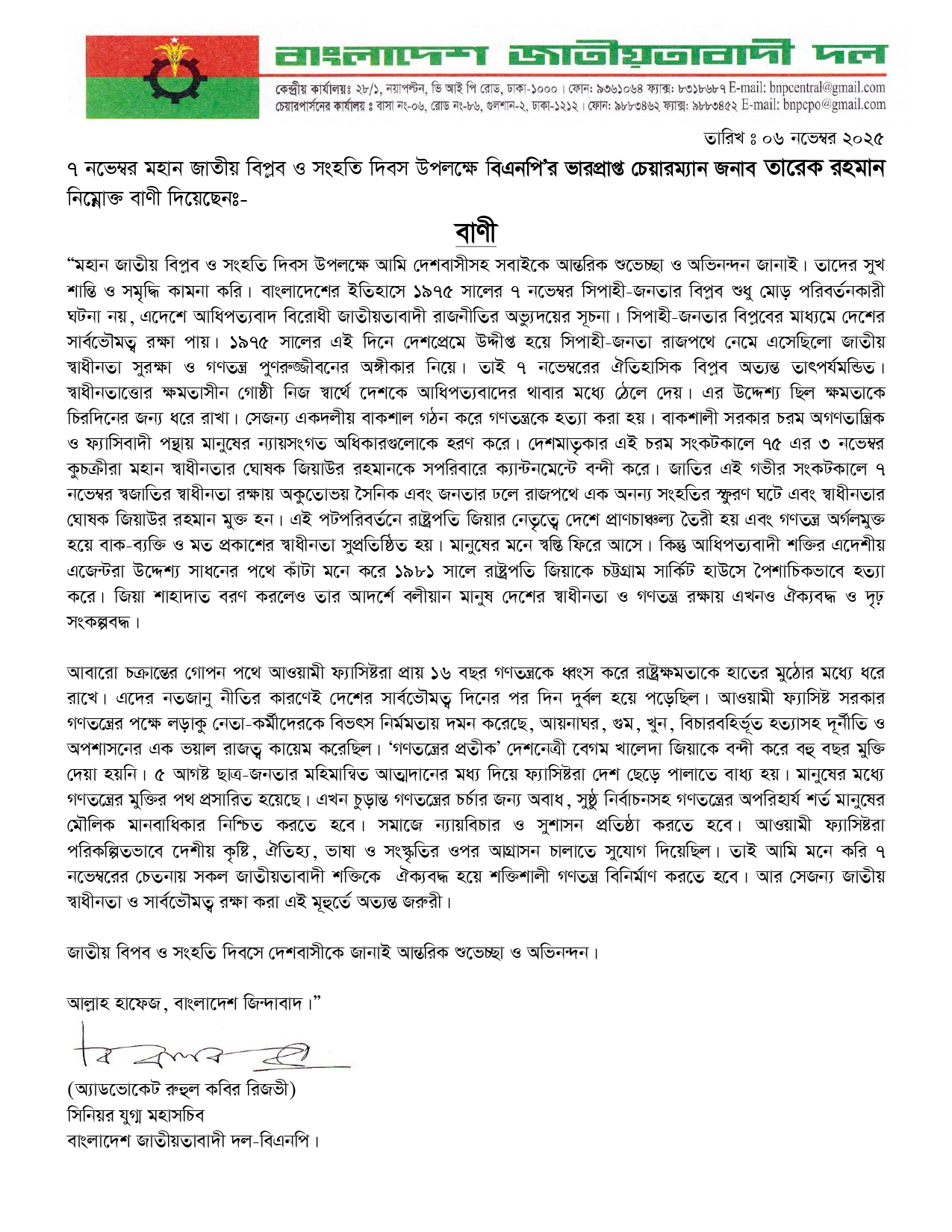
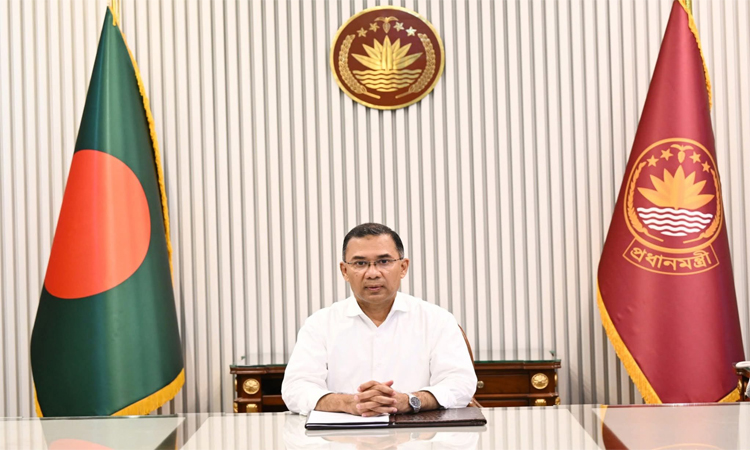
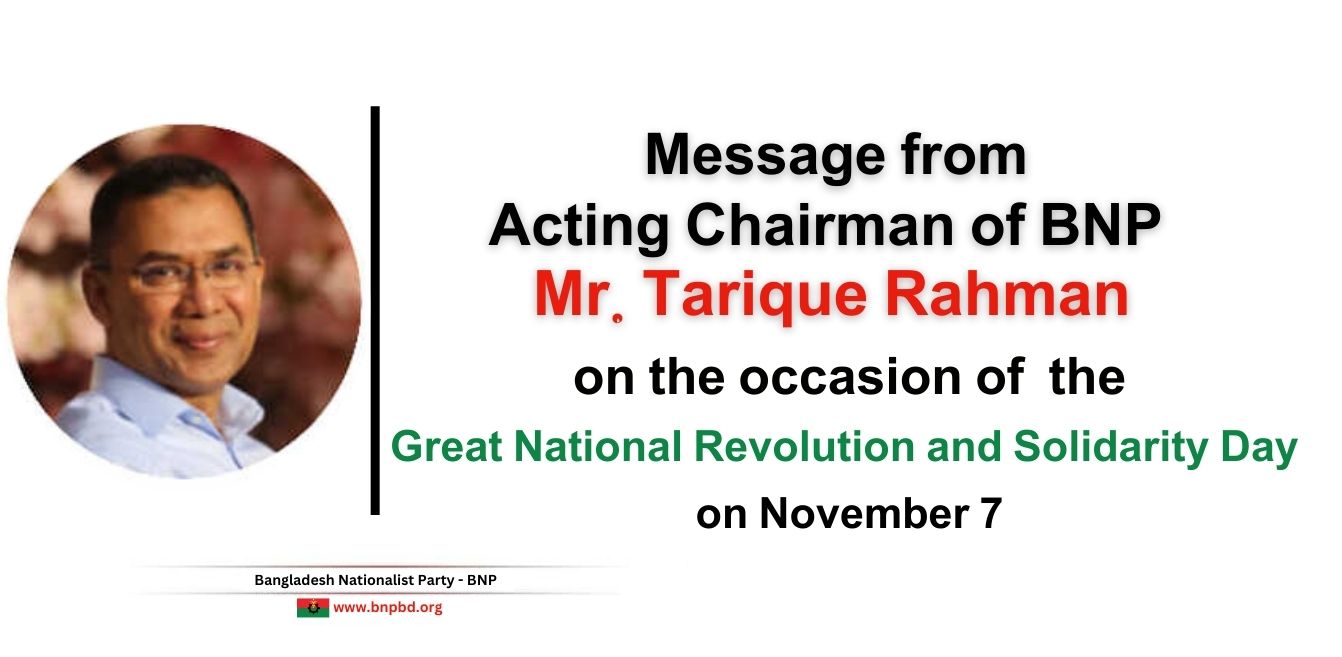
On the occasion of the Great National Revolution and Solidarity Day on November 7, BNP’s Acting Chairman Mr. Tarique Rahman has issued the following message:
“On the auspicious occasion of the Great National Revolution and Solidarity Day, I extend my heartfelt greetings and congratulations to all the people of the country. I wish them happiness, peace, and prosperity. In the history of Bangladesh, the sepoy-people’s revolution of November 7, 1975, was not just a turning point—it marked the beginning of nationalist politics against imperialism. Through the sepoy-people’s revolution, the sovereignty of the nation was protected. On this day in 1975, inspired by patriotism, the soldiers and people took to the streets with a pledge to safeguard national independence and revive democracy. Therefore, the historic revolution of November 7 holds profound significance. After independence, the ruling clique pushed the country into the grip of imperialism for its own interests, aiming to hold onto power forever. To achieve this, they established the one-party BAKSAL system and murdered democracy. The BAKSAL regime, through extreme undemocratic and fascist means, deprived the people of their rightful freedoms. During this grave national crisis, on November 3, 1975, conspirators imprisoned the Proclaimer of Independence, Shaheed President Ziaur Rahman, and his family inside the cantonment. At that dark hour, on November 7, in defense of national freedom, a wave of fearless soldiers and people surged onto the streets, igniting an unparalleled spirit of unity. As a result, the Proclaimer of Independence, Ziaur Rahman, was freed. This dramatic turn of events, under the leadership of President Zia, revived national vitality—democracy was unshackled, and freedom of speech, thought, and expression was firmly reestablished. Peace and confidence returned to the hearts of the people. However, the domestic agents of imperialist powers, viewing this as an obstacle to their interests, brutally assassinated President Ziaur Rahman at the Chittagong Circuit House in 1981. Though Zia was martyred, his ideals continue to inspire a determined and united people in their struggle to protect national independence and democracy.
Once again, through conspiracies and deceit, the Awami fascists destroyed democracy for nearly sixteen years and clung to state power. Due to their subservient policies, the country’s sovereignty was gradually weakened. The Awami fascist regime brutally suppressed pro-democracy leaders and activists with horrific cruelty—through secret prisons, enforced disappearances, extrajudicial killings, corruption, and misrule, establishing a reign of terror. The ‘Symbol of Democracy,’ our leader Begum Khaleda Zia, was unjustly imprisoned for years and denied freedom. But on August 5, through the glorious self-sacrifice of students and the people, the fascists were forced to flee the country. A new path toward democratic freedom has now opened. At this stage, it is essential to ensure free and fair elections, along with the protection of fundamental human rights, for the true practice of democracy. Justice and good governance must prevail in society. The Awami fascists had deliberately allowed aggression against our native culture, traditions, language, and heritage. Therefore, I believe that in the spirit of November 7, all nationalist forces must unite to build a strong democracy. To achieve that, safeguarding our national independence and sovereignty is of utmost importance at this moment.
On the occasion of the National Revolution and Solidarity Day, I extend my sincere greetings and congratulations to the people of Bangladesh.
Allah Hafez, Bangladesh Zindabad.”
(Advocate Ruhul Kabir Rizvi)
Senior Joint Secretary General
Bangladesh Nationalist Party (BNP)